
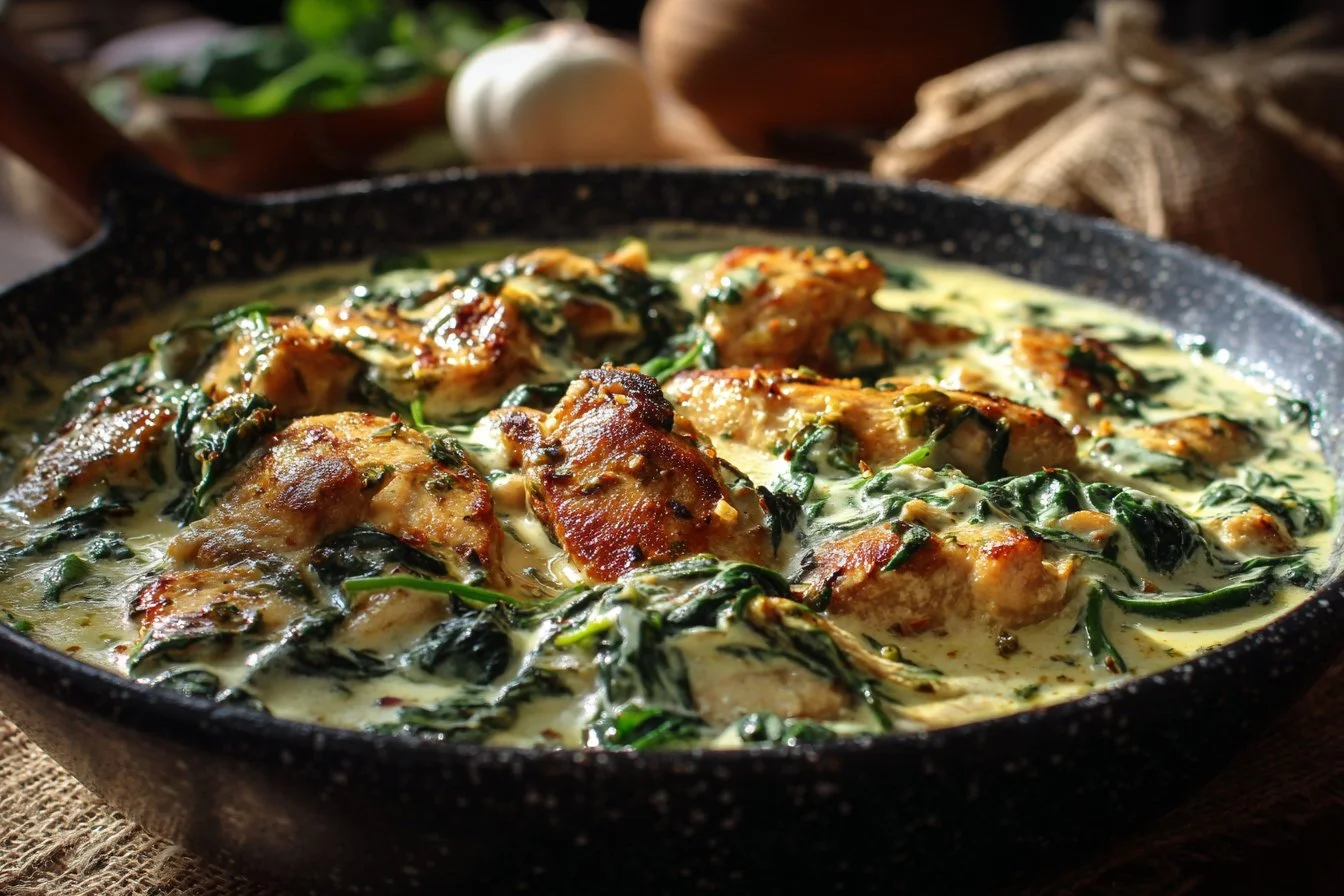
Have you ever dreamt of enjoying a dish that fills your home with the warm, inviting aroma of garlic simmering in cream? Imagine sinking your fork into perfectly cooked chicken, tender and juicy, bathed in a rich, velvety sauce adorned with vibrant spinach and a sprinkle of parmesan. This is the essence of Chicken Florentine. Not only is this dish incredibly flavorful, but it also boasts simplicity, making it a fantastic option for both weeknight dinners and special occasions. Whether you’re entertaining guests or just looking for a comforting meal, Chicken Florentine fits the bill. Prepare to indulge in a delightful culinary experience that’s sure to impress.
Why make this recipe?
One of the standout attributes of Chicken Florentine is its versatility. You can serve it over pasta, rice, or even mashed potatoes, accommodating various preferences and making it a family-friendly option. With just a handful of ingredients and a quick cooking process, you can have a restaurant-quality meal on the table in under 30 minutes. This dish is also budget-friendly, utilizing basic pantry staples while offering a luxurious flavor profile. Plus, even those unfamiliar with cooking can easily master this delectable recipe, ensuring a satisfying dining experience without stress.
How to Make Chicken Florentine
Ingredients
- 2 boneless, skinless chicken breasts
- Salt and pepper to taste
- 2 tablespoons olive oil
- 2 cloves garlic, minced
- 1 cup heavy cream
- 1/2 cup grated Parmesan cheese
- 2 cups fresh spinach
- 1/2 cup white wine
- Pasta, rice, or mashed potatoes for serving

Directions
- Season the chicken breasts generously with salt and pepper on both sides.
- In a large skillet, heat olive oil over medium-high heat. Once hot, add the chicken breasts. Sear for about 6-7 minutes on each side, or until they are golden brown and cooked through. Once done, remove the chicken from the skillet and set aside.
- In the same skillet, add minced garlic and cook for 1 minute, stirring constantly until fragrant but not burnt.
- Pour in the white wine, stirring and scraping up any browned bits from the bottom of the pan. Let it come to a simmer, allowing the alcohol to cook off.
- Stir in the heavy cream and grated Parmesan cheese. Cook the mixture for about 2-3 minutes until the sauce thickens enough to coat the back of a spoon.
- Add the fresh spinach, stirring gently until it wilts down, which should take about 2 minutes.
- Return the seared chicken to the skillet, ensuring it is well coated in the creamy sauce.
- Serve your Chicken Florentine over your choice of pasta, rice, or creamy mashed potatoes for a fulfilling meal.
How to Serve Chicken Florentine
Chicken Florentine is best served hot and fresh from the skillet. When plating, consider adding a generous drizzle of the creamy sauce over your chosen starch and placing the chicken on top for a beautiful presentation. Pair it with a light salad or steamed vegetables to balance the richness of the dish. For an extra touch, garnish with fresh herbs like parsley or basil, which enhance both the flavor and visual appeal. A chilled glass of white wine complements this dish splendidly, making it a perfect centerpiece for any dinner table.
How to Store Chicken Florentine
To store your Chicken Florentine, place any leftovers in an airtight container and refrigerate for up to 3 days. If you wish to freeze it, ensure the dish has cooled down and then transfer it into a freezer-safe container. It can be stored for up to 2 months. To reheat, the best method is on the stovetop over low heat, stirring occasionally to maintain the creamy texture. Alternatively, you can microwave it in short increments, ensuring you don’t overcook the chicken. Always check for any off smells or changes in texture before reheating to ensure freshness.
Tips to Make Chicken Florentine
Prep Ahead: To save time, you can marinate your chicken breasts in olive oil and seasonings a few hours before cooking.
Ingredient Swaps: If you’re out of white wine, chicken broth works well as a substitute and adds flavor to the sauce.
Avoid Dryness: Don’t overcrowd the pan while searing the chicken, as this will lower the pan’s temperature and result in uneven cooking.
Equipment: A cast-iron skillet provides excellent heat retention and searing capabilities for the chicken.
Make-Ahead: You can prepare the sauce in advance and just reheat it when you’re ready to add the chicken.
Consistency: If the sauce becomes too thick, thin it out with a splash of chicken broth until the desired texture is reached.
Flavor Boost: Experiment by adding a squeeze of fresh lemon juice to the sauce, which will brighten the flavors beautifully.
Chef’s Secret: For a touch of sophistication, finish the dish with a sprinkle of toasted pine nuts for added texture.
Dietary Adaptation: To make a lighter version, opt for half-and-half instead of heavy cream without sacrificing flavor.
Leftover Magic: Leftovers can be repurposed into a creamy pasta salad the next day; just toss with cold pasta and fresh veggies.
Variations
1. Veggie Florentine
Transform this dish into a plant-based delight by substituting chicken breasts with grilled eggplant or zucchini steaks. Use coconut cream for the sauce, and don’t forget to toss in some sautéed mushrooms for a hearty texture.
2. Spicy Florentine
Give your Chicken Florentine a kick by adding red pepper flakes to the garlic while it cooks. You could also incorporate some diced jalapeños in the sauce for a zesty punch that pairs fabulously with the creaminess.
3. Lemon Herb Florentine
Incorporate bright flavors by adding freshly grated lemon zest and a handful of chopped fresh herbs like basil or dill to the sauce. This version brings a refreshing twist that is perfect for spring and summer dining.
4. Mediterranean Twist
Infuse a Mediterranean flavor profile by adding sun-dried tomatoes and olives to the sauce. Serve it over quinoa or couscous for a delightful grain alternative.
5. Keto-Friendly Florentine
Swap out the heavy cream for unsweetened almond milk thickened with a low-carb thickening agent. Use a fat-free cheese alternative to keep it low-carb while maintaining a creamy texture.
FAQs
Can I make this ahead of time?
Absolutely! You can prepare the sauce and sear the chicken in advance. Just combine them when ready to serve, then heat gently on the stovetop.
How do I store leftovers?
Store your Chicken Florentine in an airtight container in the fridge for up to 3 days. To keep it fresh, ensure it has cooled down before sealing.
Can I freeze this dish?
Yes, freeze the Chicken Florentine in a freezer-safe container for up to 2 months. Thaw overnight in the fridge before reheating.
What can I substitute for white wine?
Chicken broth is a great substitute that won’t alter the flavor profile significantly, giving you a similar depth.
How do I prevent the chicken from drying out?
Ensure your skillet is hot enough before adding the chicken and avoid overcrowing the pan, which can lower the temperature and lead to uneven cooking.
Is this recipe gluten-free?
Yes, Chicken Florentine is gluten-free as long as you use gluten-free pasta or grains if serving on the side.
Can I use frozen spinach?
Definitely! Just make sure to thaw and drain frozen spinach before adding it to the sauce for the best texture.
How do I know when it’s done?
The chicken is cooked through when its internal temperature reaches 165°F and juices run clear when pierced with a knife.
Serving up Chicken Florentine not only satisfies your taste buds but also allows you to enjoy a fulfilling culinary experience that is easy to replicate at home. So gather your ingredients, and let this delightful dish take center stage on your dinner table!