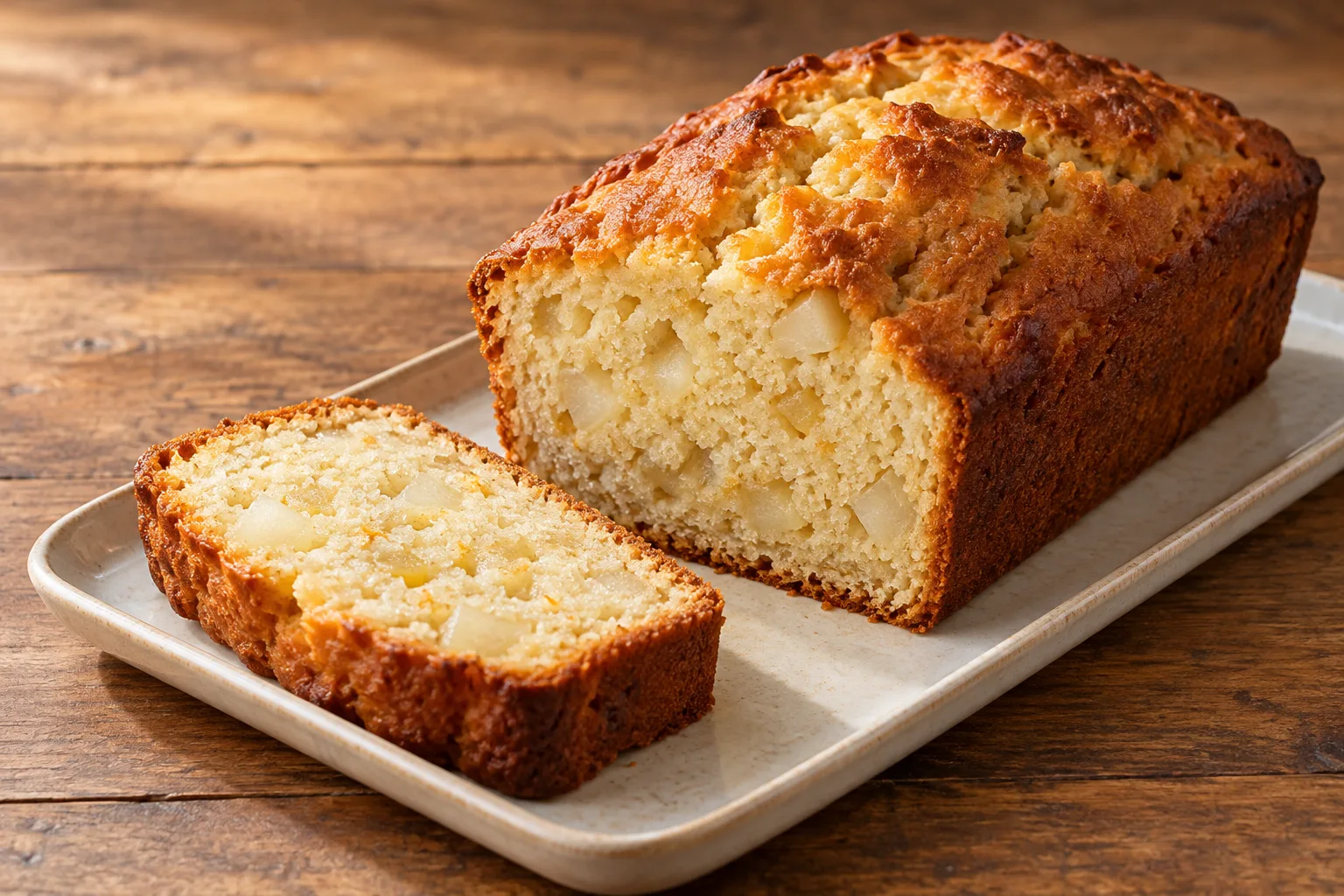
Pear ginger ricotta loaf is a simple quick bread with small pieces of pear and the warmth of ground ginger. Ricotta adds moisture and a delicate dairy flavor, while a modest amount of oil keeps the batter easy to mix. The golden crust needs no frosting, glaze or powdered-sugar finish.
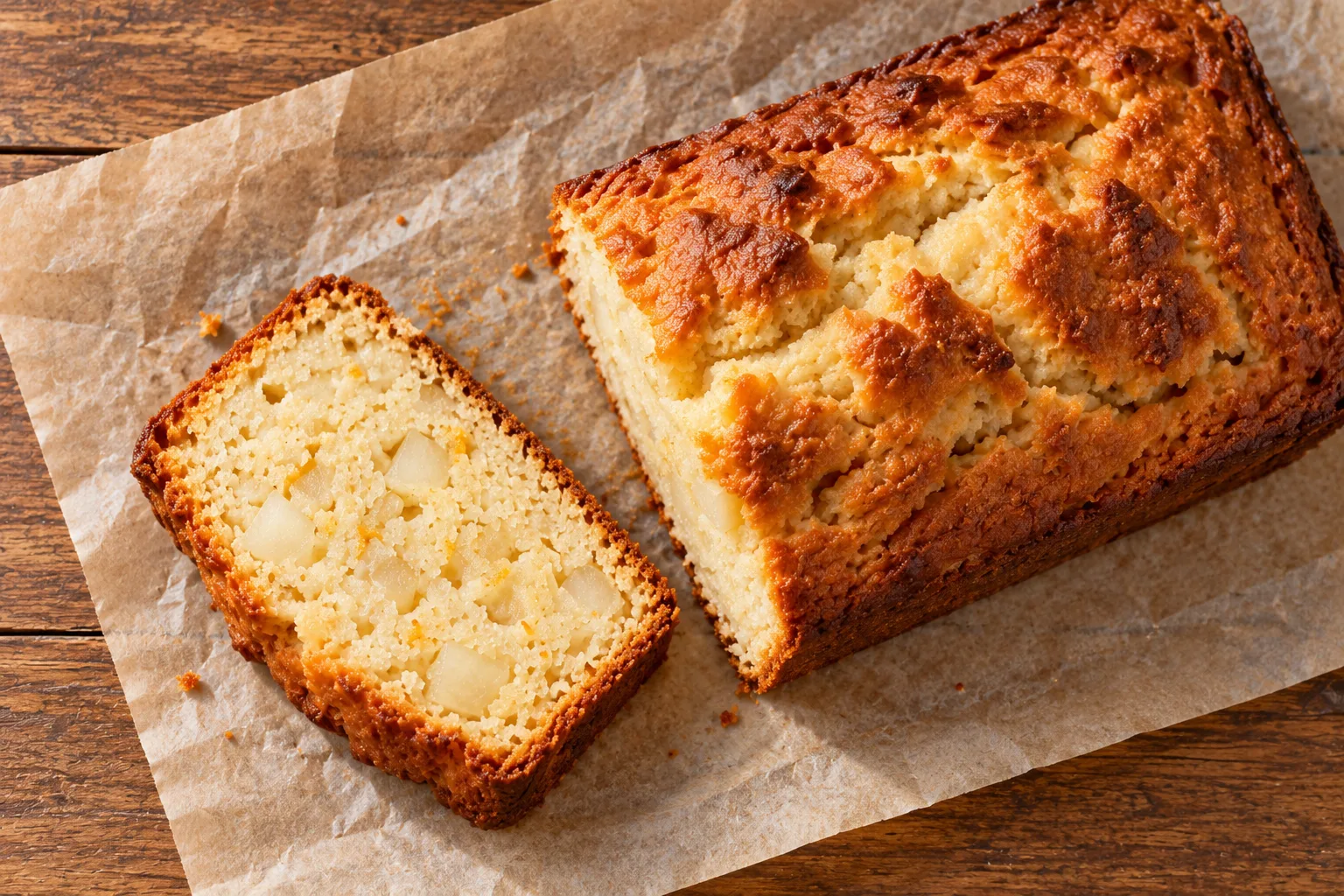
The fruit is diced and folded into the batter rather than laid in large slices on top. That gives each slice small pear pockets without a heavy wet layer. Let the loaf cool before cutting so the center has time to settle. Baking time and the estimated ten-slice yield vary with your pan, fruit and oven.
Recipe at a Glance
- Approximate yield: 10 slices
- Prep: 20 minutes
- Cook: 65 minutes
- Cooling: 90 minutes
- Total: 175 minutes
- Equipment: 9-by-5-inch metal loaf pan; Parchment paper; Two mixing bowls; Whisk; Cooling rack
Ingredients
Loaf
- 1 3/4 cups all-purpose flour — 210 g
- 2 teaspoons baking powder
- 1 1/2 teaspoons ground ginger
- 1/2 teaspoon fine salt
- 3/4 cup granulated sugar — 150 g
- 2 large eggs
- 3/4 cup whole-milk ricotta — 185 g; drain visible pooled whey before measuring
- 1/3 cup neutral oil — 80 ml
- 1 teaspoon vanilla extract
- 1 cup peeled and cored firm-ripe pear — 160 g; diced 1/4-inch
- 1 teaspoon neutral oil — for greasing the pan
How to Make Pear Ginger Ricotta Loaf
1. Prepare the oven and pan
Heat the oven to 350°F (175°C). Grease a 9-by-5-inch metal loaf pan with 1 teaspoon oil and line its bottom and long sides with parchment, leaving an overhang. Peel and core the pear, dice it into 1/4-inch pieces and measure 1 cup.
2. Mix the dry ingredients
Whisk flour, baking powder, ground ginger and salt in one bowl. Mix thoroughly so there are no pockets of baking powder or concentrated ginger in the finished loaf.
3. Mix the wet ingredients
In a second bowl, whisk the sugar and eggs until well combined. Add the measured ricotta, 1/3 cup oil and vanilla. Whisk until the ricotta is evenly dispersed; a few tiny curds are fine. Pour away visible pooled whey before measuring the ricotta rather than tipping that extra liquid into the batter.
4. Fold the batter
Add the dry mixture to the wet mixture and fold until only a few flour streaks remain. Fold in the diced pear until the flour disappears. Stop mixing once combined. Transfer to the lined pan and smooth the top gently without compressing the batter.
5. Bake and check the center
Bake for 55–70 minutes, checking from 55 minutes. The top should be golden and a thin tester inserted through the center should come out without raw batter. Pierce a second spot if the tester goes directly through a pear piece. If the top is browned before the middle is set, loosely tent with foil and keep baking.
6. Cool before slicing
Cool in the pan on a rack for 15 minutes. Lift the loaf out with the parchment and leave it on the rack for about 75 minutes more, or until cool. Slice into approximately 10 pieces with a sharp serrated knife. Do not cut through a steaming-hot loaf and judge that soft center as its final texture.
Choosing Pears and Ricotta
Choose a firm-ripe pear that yields slightly near the stem but holds its shape when diced. A hard, unripe pear can stay crunchy after baking; an overripe pear can collapse and introduce excessive juice. The prepared weight matters more than how many pears happen to fill your shopping bag.
Whole-milk ricotta varies in moisture. The recipe calls for draining visible pooled whey, not pressing every bit of moisture out of the cheese. If a tub is very watery, place the ricotta briefly in a fine sieve before measuring the recipe quantity.
Ground ginger spreads its flavor evenly through the dry mixture. Fresh grated ginger has a different moisture level and flavor strength, so do not exchange it spoon for spoon. Keep the first batch close to the stated ingredient list before experimenting.
Mixing and Baking Tips
Spoon flour into a measuring cup and level it, or weigh 210 g. Packing flour into the cup changes the balance of the batter and can make the loaf heavy. Measure baking powder with a level spoon and check that it is still within its usable date.
Once the flour is added, fold with a spatula rather than whisking vigorously. The aim is to remove dry streaks without overworking the batter. Dice the pear uniformly so it spreads through the loaf instead of collecting in a few large damp pockets.
The loaf pan’s size matters. A smaller pan produces a deeper center that takes longer to bake and can overflow. A wider pan makes a shallower loaf. Dark metal also browns more quickly; start checking early and protect an already browned top with foil if necessary.
Serving and Advance Preparation
This loaf works as an afternoon slice or a simple dessert. Serve it plain to let the ginger and pear flavors come through. A thin slice is easier to lift than a very thick wedge when the crumb contains moist fruit.
Bake the loaf before storing it rather than leaving the mixed batter to sit for a long time. Baking powder begins reacting once hydrated, and a long rest changes the rise. Keep the ingredient quantities, pan size and cooling method together when recording changes for another batch.
For a variation, change one ingredient at a time and note the result. Apples are firmer and have a different moisture balance from pears, and a gluten-free flour blend needs its own evaluation. This formula includes wheat, eggs and dairy.
Storage and Reheating
Once cooled, wrap or place in an airtight container and refrigerate promptly. Refrigerate within 2 hours, or within 1 hour when the room exceeds 90°F (32°C). Keep at 40°F (4°C) or below and use within 3–4 days. For longer storage, wrap individual cooled slices and freeze; thaw in the refrigerator. Discard any slice showing spoilage.
For leftover handling, see USDA guidance.
Frequently Asked Questions
Why did my loaf sink in the center?
An underbaked middle, extra fruit liquid or a different pan can contribute. Check two central spots for raw batter and measure the prepared pear and ricotta carefully.
Can I use canned pears?
Canned pears bring different moisture and sweetness. This formula uses fresh firm-ripe pear; canned fruit is not a direct substitution.
Why wait before slicing?
Cooling lets the loaf structure settle and helps prevent a gummy-looking cut surface. Use the estimated cooling time as a guide and check that the middle has actually cooled.
Pear Ginger Ricotta Loaf
Equipment
- 9-by-5-inch metal loaf pan
- Parchment Paper
- Two mixing bowls
- Whisk
- Cooling rack
Ingredients
Loaf
- 1 3/4 cups all-purpose flour 210 g
- 2 teaspoons baking powder
- 1 1/2 teaspoons ground ginger
- 1/2 teaspoon fine salt
- 3/4 cup granulated sugar 150 g
- 2 large eggs
- 3/4 cup whole-milk ricotta 185 g; drain visible pooled whey before measuring
- 1/3 cup neutral oil 80 ml
- 1 teaspoon vanilla extract
- 1 cup peeled and cored firm-ripe pear 160 g; diced 1/4-inch
- 1 teaspoon neutral oil for greasing the pan
Instructions
Method
- Heat the oven to 350°F (175°C). Grease a 9-by-5-inch metal loaf pan with 1 teaspoon oil and line its bottom and long sides with parchment, leaving an overhang. Peel and core the pear, dice it into 1/4-inch pieces and measure 1 cup.
- Whisk flour, baking powder, ground ginger and salt in one bowl. Mix thoroughly so there are no pockets of baking powder or concentrated ginger in the finished loaf.
- In a second bowl, whisk the sugar and eggs until well combined. Add the measured ricotta, 1/3 cup oil and vanilla. Whisk until the ricotta is evenly dispersed; a few tiny curds are fine. Pour away visible pooled whey before measuring the ricotta rather than tipping that extra liquid into the batter.
- Add the dry mixture to the wet mixture and fold until only a few flour streaks remain. Fold in the diced pear until the flour disappears. Stop mixing once combined. Transfer to the lined pan and smooth the top gently without compressing the batter.
- Bake for 55–70 minutes, checking from 55 minutes. The top should be golden and a thin tester inserted through the center should come out without raw batter. Pierce a second spot if the tester goes directly through a pear piece. If the top is browned before the middle is set, loosely tent with foil and keep baking.
- Cool in the pan on a rack for 15 minutes. Lift the loaf out with the parchment and leave it on the rack for about 75 minutes more, or until cool. Slice into approximately 10 pieces with a sharp serrated knife. Do not cut through a steaming-hot loaf and judge that soft center as its final texture.